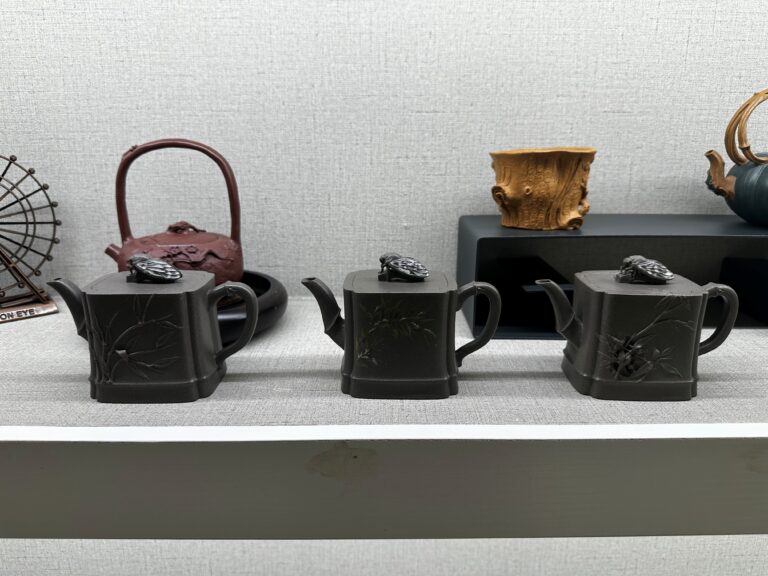

For many serious Gong Fu Cha practitioners, the Yixing teapot (宜兴紫砂壶) is considered the pinnacle of Chinese teaware. Often called the “king of teapots,” Yixing Zisha represents a perfect marriage between functionality, tradition, and quiet beauty.
Yixing teapots first appeared during the mid-Ming Dynasty (around 1500–1600) in the town of Yixing, Jiangsu Province. The unique purple clay (Zisha) from the local mountains quickly gained fame among scholars and tea masters. By the late Ming and throughout the Qing Dynasty (1644–1912), Yixing teapots had become highly prized collector’s items. Even emperors and famous literati collected and used them.
Unlike porcelain, which is glazed and fired at very high temperatures, Yixing clay is left unglazed. This gives it a special character that has fascinated tea lovers for over 400 years.
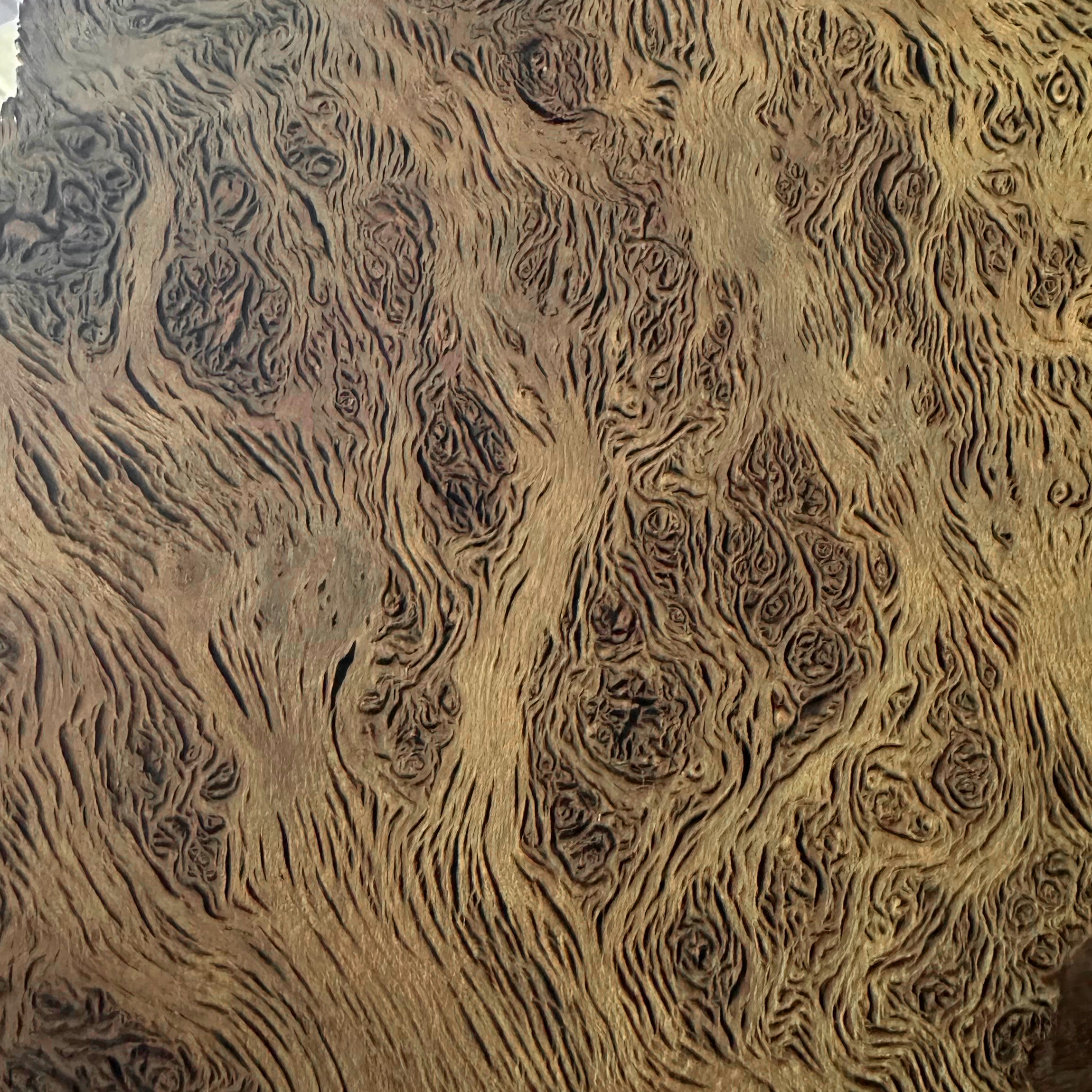
The magic of Yixing lies in its highly porous clay. Over time, the teapot absorbs tiny amounts of tea oils, minerals, and compounds from the brewed tea. This process, called “seasoning” or “raising the pot” (养壶), creates a natural patina on the surface.
Key characteristics:
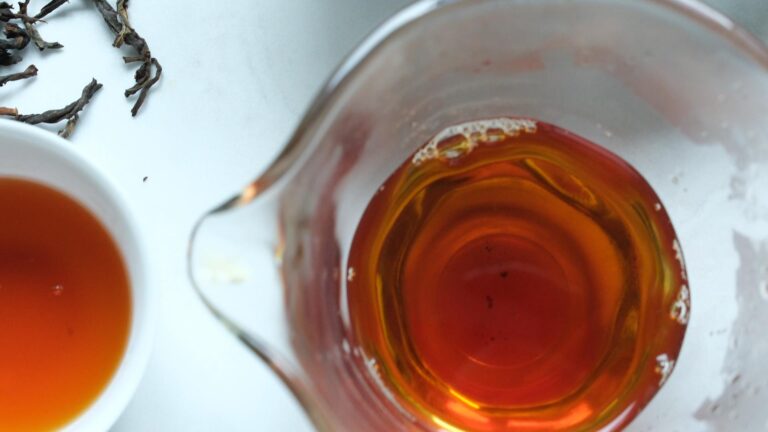
Because Yixing teapots absorb flavors, they are usually dedicated to one specific tea type. This is their greatest strength — and also their limitation.
Best suited for:
Not recommended for:
A well-seasoned Yixing teapot is much more than a brewing tool. It becomes a personal companion that grows more beautiful and flavorful with every tea session. In the fast-paced modern world, owning and caring for a Yixing teapot is a quiet act of patience, dedication, and respect for ancient traditions.
To brew tea in a good Yixing pot is to participate in a conversation that began over 400 years ago — between earth, fire, water, and time.
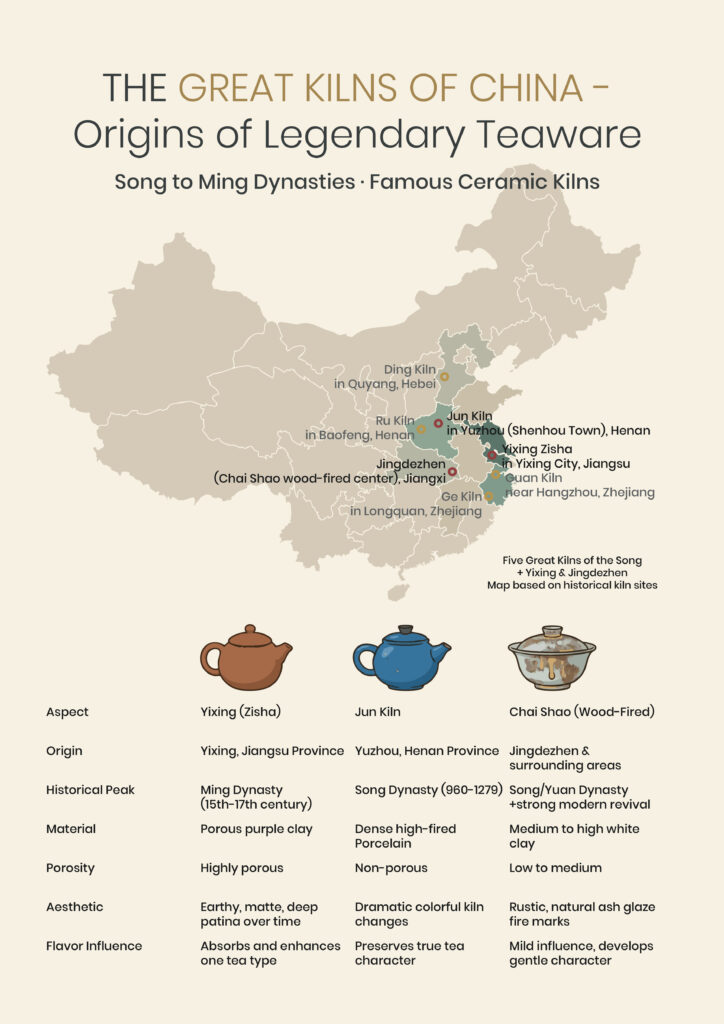
–> Jun Kiln vs Chai Shao vs Yixing > Blog
Chat with us
We noticed you're visiting from Germany. We've updated our prices to Euro for your shopping convenience. Use United States (US) dollar instead. Dismiss