
In the world of Gong Fu Cha, few teapots carry as much soul and natural beauty as Chai Shao (柴烧) teapots. Fired for days in wood kilns without glaze, these pieces are shaped not only by the potter’s hands but by the unpredictable dance of flame, wood ash, and time.
Chai Shao represents a return to the most authentic and ancient way of creating ceramics — a philosophy where imperfection becomes beauty and fire becomes the final artist.
Chai Shao literally means “firewood firing.” Unlike modern electric or gas kilns, the teapots are placed naked (without protective saggars) inside a wood-fired kiln and fired for 4 to 5 days and nights at extremely high temperatures. During this long process, pine wood ash naturally falls onto the clay surface, melts, and creates unique, organic glazes.
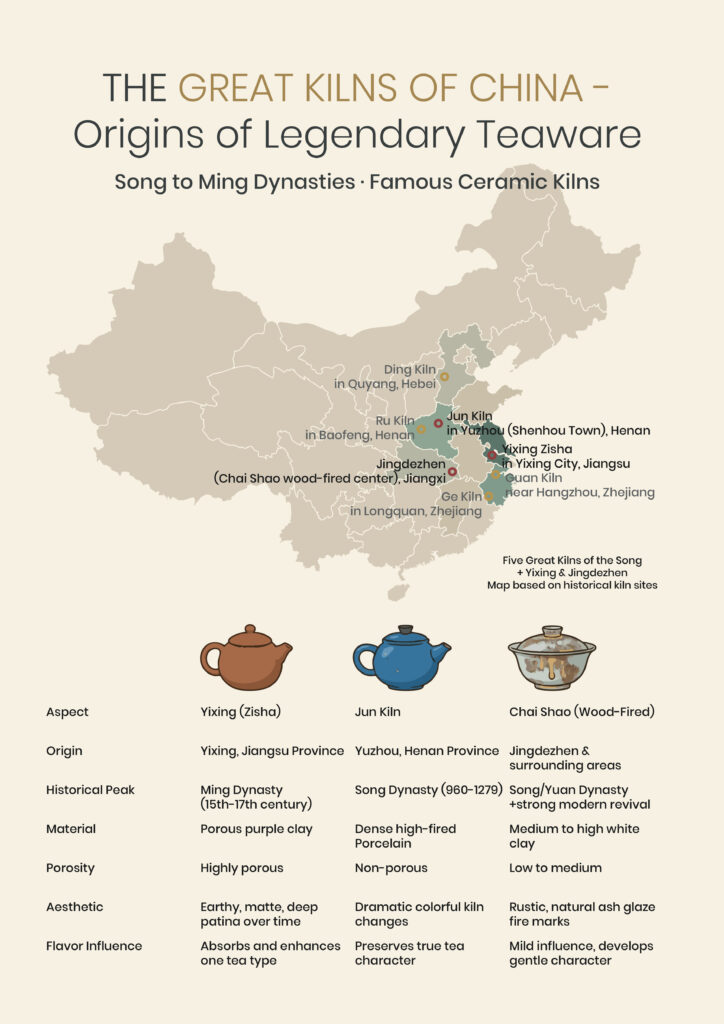
This technique has been practiced for over a thousand years, but experienced a strong revival in modern Jingdezhen and other kiln regions.
Wood-firing techniques flourished during the Song Dynasty (960–1279) and Yuan Dynasty (1271–1368). Potters at that time already understood the beauty that could be created when clay and fire worked together. While many traditional techniques were lost over centuries, contemporary artists have brought back the long-firing method with even greater dedication and precision.
Here are the most important features that define authentic Chai Shao teapots:
Chai Shao teapots perform excellently with:
They are less ideal for very delicate, fresh green teas, as the natural ash and fire character can sometimes mute the brightest floral notes.
Chai Shao teapots offer a perfect balance: they have enough character to be interesting, but are not as “territorial” as Yixing teapots. Many collectors appreciate their rustic elegance and the story each piece tells — the story of fire, patience, and nature.
A Chai Shao teapot is more than a brewing vessel. It is a living record of fire and time — each fire mark, ash flow, and jade-green shimmer a reminder that true beauty often emerges from chaos and patience. In a fast-moving world, these teapots invite us to slow down and appreciate the natural, imperfect, and deeply authentic.
May your Chai Shao teapot bring warmth, character, and many peaceful tea moments into your life.
–> Jun Kiln vs Chai Shao vs Yixing > Blog
Chat with us