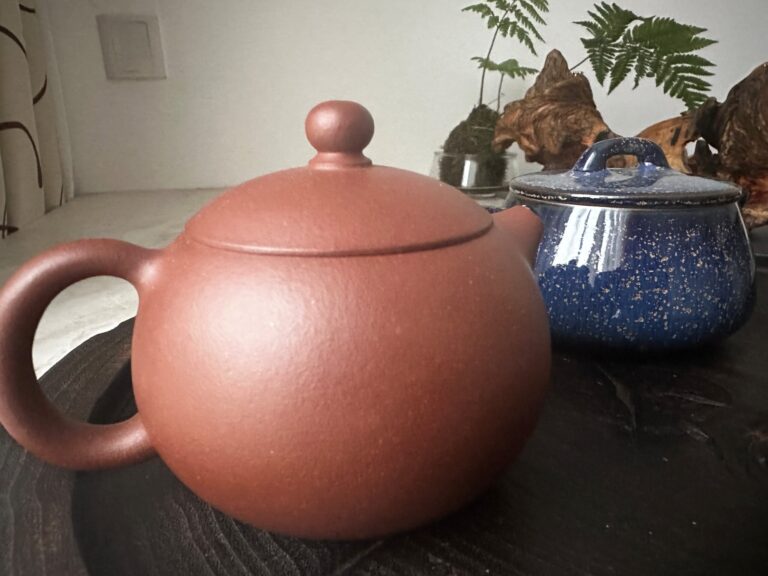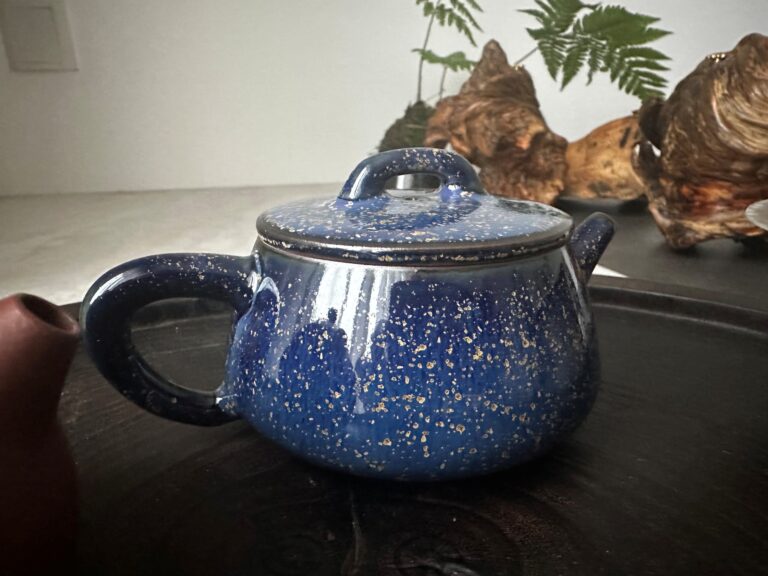

In the world of Gong Fu Cha, the teapot is more than just a brewing vessel — it is a partner in your daily ritual. Among the most respected Chinese teapots, three styles stand out: Yixing (Zisha), Jun Kiln (Jun Yao), and Chai Shao (Wood-Fired). Each carries its own history, philosophy, and personality.
Understanding their differences will help you find the teapot that truly resonates with your tea journey.
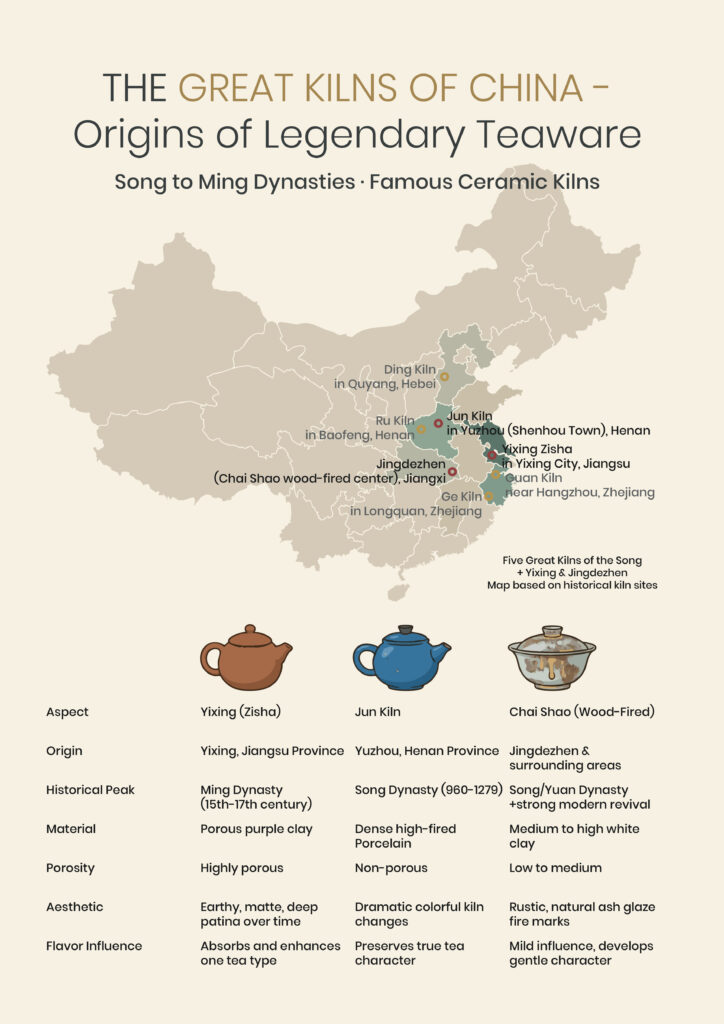
| Aspect | Yixing (Zisha) | Jun Kiln | Chai Shao (Wood-Fired) |
|---|---|---|---|
| Origin | Yixing, Jiangsu Province | Yuzhou, Henan Province | Jingdezhen & surrounding areas |
| Historical Peak | Ming Dynasty (15th–17th century) | Song Dynasty (960–1279) | Song/Yuan + strong modern revival |
| Material | Porous purple clay | Dense high-fired porcelain | Medium to high white clay |
| Porosity | Highly porous | Non-porous | Low to medium |
| Aesthetic | Earthy, matte, deep patina over time | Dramatic colorful kiln changes | Rustic, natural ash glaze & fire marks |
| Flavor Influence | Absorbs and enhances one tea type | Preserves true tea character | Mild influence, develops gentle character |
Yixing Teapots The story of Yixing teapots began in the Ming Dynasty around 1500–1600. The unique purple clay from the hills around Yixing quickly gained popularity among scholars and tea masters. By the Qing Dynasty (1644–1912), they had become a symbol of refined Chinese tea culture and were collected by emperors and intellectuals alike.
Jun Kiln Porcelain Jun ware is one of the legendary “Five Great Kilns” of the Song Dynasty (960–1279). It was highly prized by Song emperors for its mysterious, colorful glazes created by unpredictable kiln transformations. After centuries of decline, Jun Kiln experienced a remarkable revival in modern times, particularly in Yuzhou, Henan — its historical birthplace.
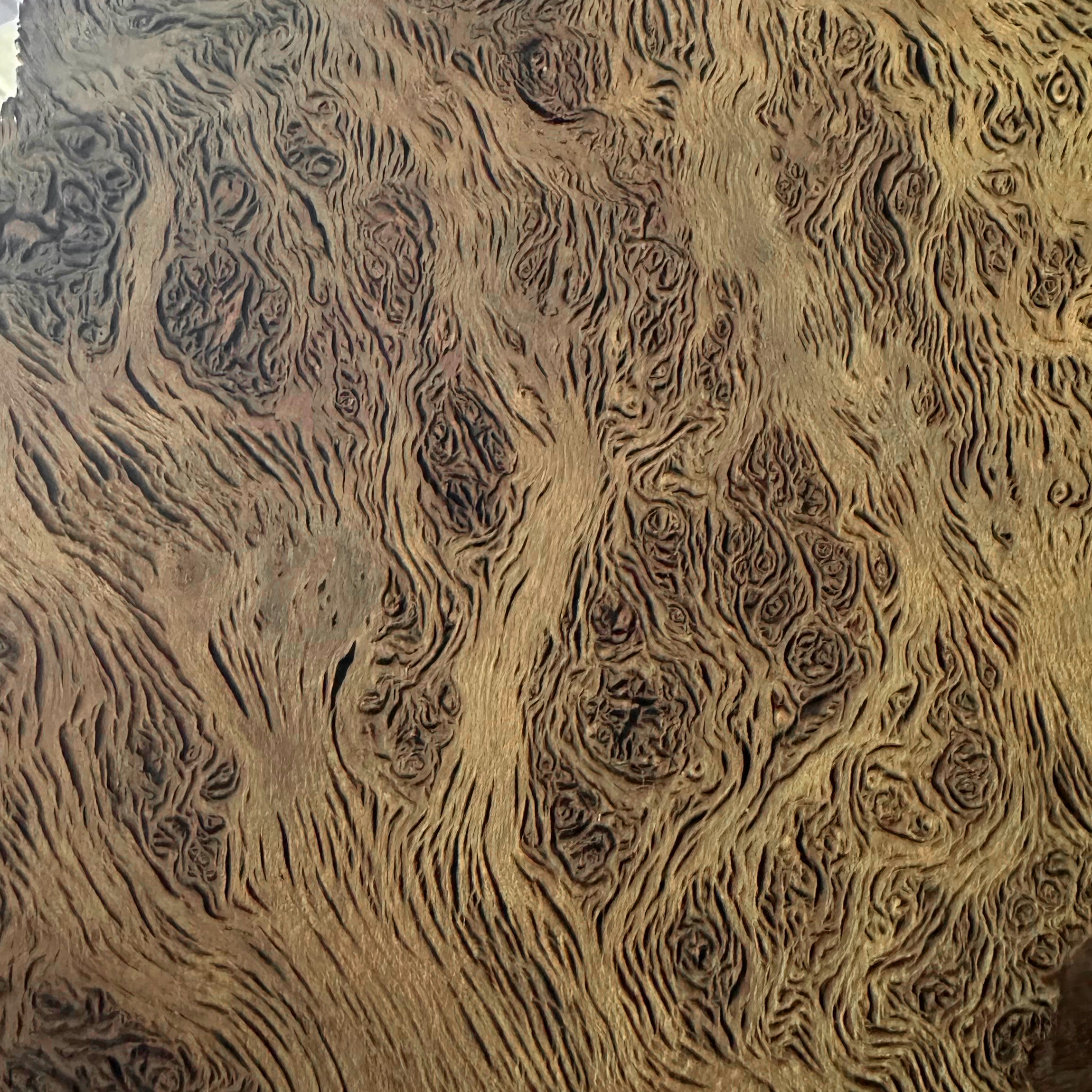
Chai Shao (Wood-Fired Teapots) Wood-firing techniques have existed for over 1,000 years, flourishing especially during the Song (960–1279) and Yuan Dynasties (1271–1368). In contemporary China, especially since the 1990s, artists in Jingdezhen and other regions have revived long wood-firing cycles, often lasting 4 to 5 days and nights, creating highly individual pieces that celebrate the raw power of fire and wood ash.
Yixing Teapots Best suited for dedicated, single-tea use. Ideal for: Aged Sheng Pu-erh, Shou Pu-erh, heavily roasted Rock Oolongs (Da Hong Pao, Shui Xian), and strong Black teas. Not recommended for delicate Green or White teas.
Jun Kiln Porcelain The most versatile option. Excellent for: Green teas, White teas, lightly roasted Oolongs (Tie Guan Yin, Phoenix Dan Cong), Sheng Pu-erh, and Jasmine teas. Because it is non-porous, it allows the pure character of each tea to shine without interference.
Chai Shao Wood-Fired Teapots A beautiful middle ground with natural character. Excellent for: Roasted Oolongs, Sheng Pu-erh, Black teas, and White teas. Good for daily use, though very delicate Green teas may not show their brightest side.
Whether you seek the deep, evolving memory of Yixing clay, the colorful artistic beauty of Jun Kiln, or the raw, natural soul of Chai Shao wood-firing — each teapot tells its own story of fire, earth, and time. The perfect teapot is not the most expensive one, but the one that feels right in your hands and brings harmony to your daily tea practice.
May your chosen teapot accompany you for many peaceful and flavorful moments.
Chat with us